Every part on the shop floor carries its own QR, installations are checked off from a phone, and what gets deleted can be restored
A month spent closing the loop between office, shop floor and site: the codes are born when a job is sent to production and travel with every part until it is installed.
One QR per part, from release to production to the final label
When a job is sent to production, Nexus creates a scannable code for every cut, machining, frame, glass pane and unit. Stations read it with a handheld scanner — or with the camera on a tablet or phone — and select the item on their own; if the code belongs to another job or is already done, Nexus says so. The same QR appears on the work order, the cutting report, the assembly instructions and the label stuck on the profile.
Two extras: when glass is ordered, the email to the supplier attaches a sheet of QR labels so every pane arrives identified; and the finished-product label can carry a public QR with the product sheet — dimensions, colour, date and contact details; never customer or prices.
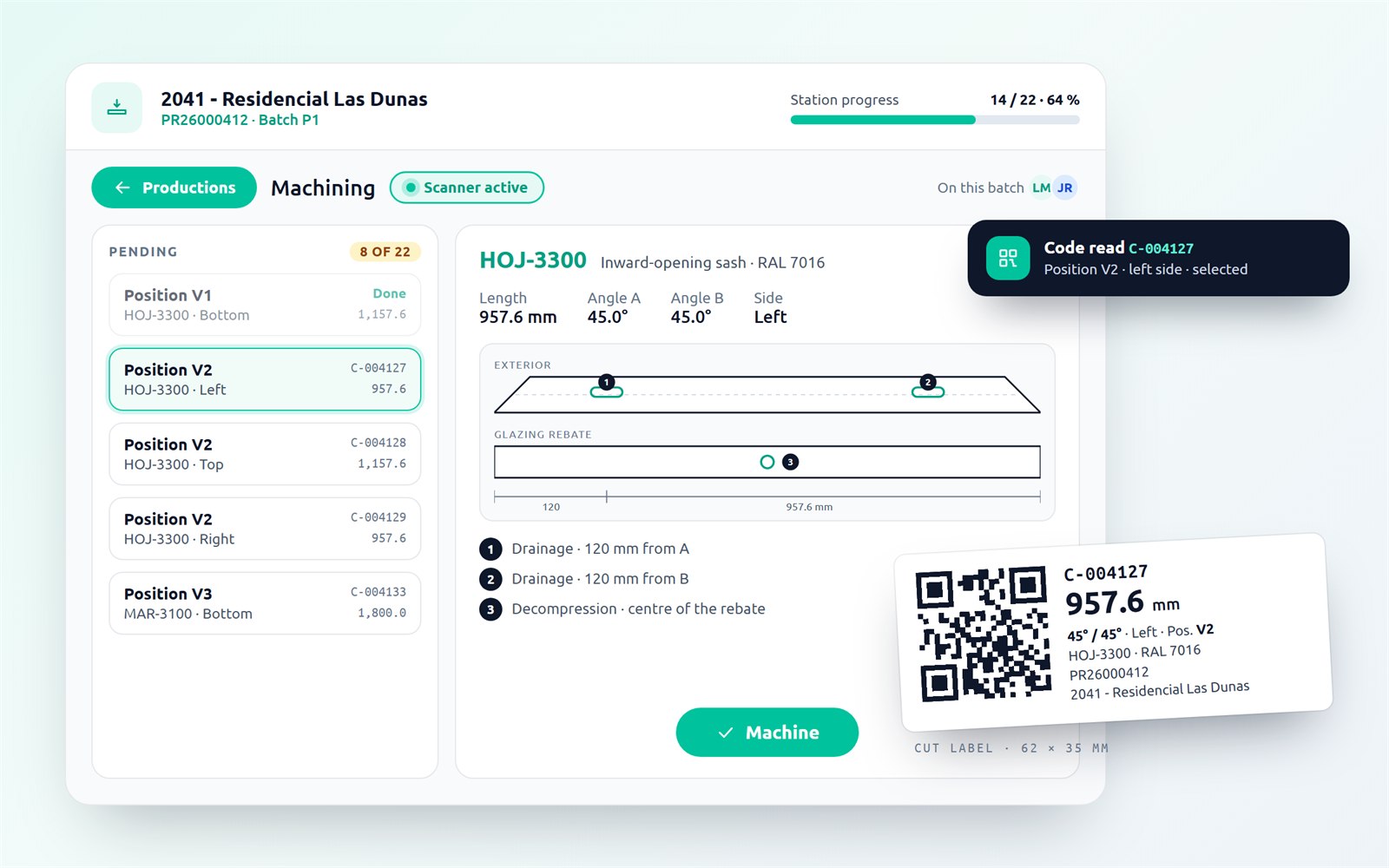
Shop floor: on tablet and phone, with station order under control
Every station monitor now works on tablet and phone without losing features: a step bar shows one area at a time and the action button always stays in view. On large screens there is an optional shop-floor view with batch progress in the header.
New sequence mode: free as before, per batch (a station does not open until the previous one is finished) or per item (each bar, frame or unit enters as soon as its previous step is done). Blocked items show a padlock and the reason; overriding asks for a justification and is logged.
And the paperwork writes itself: work order, cutting report, bars with machinings and assembly instructions as PDFs when the job is sent to production, and one click away from the sales document and the control station.
Installation: on-site check with photos and real times
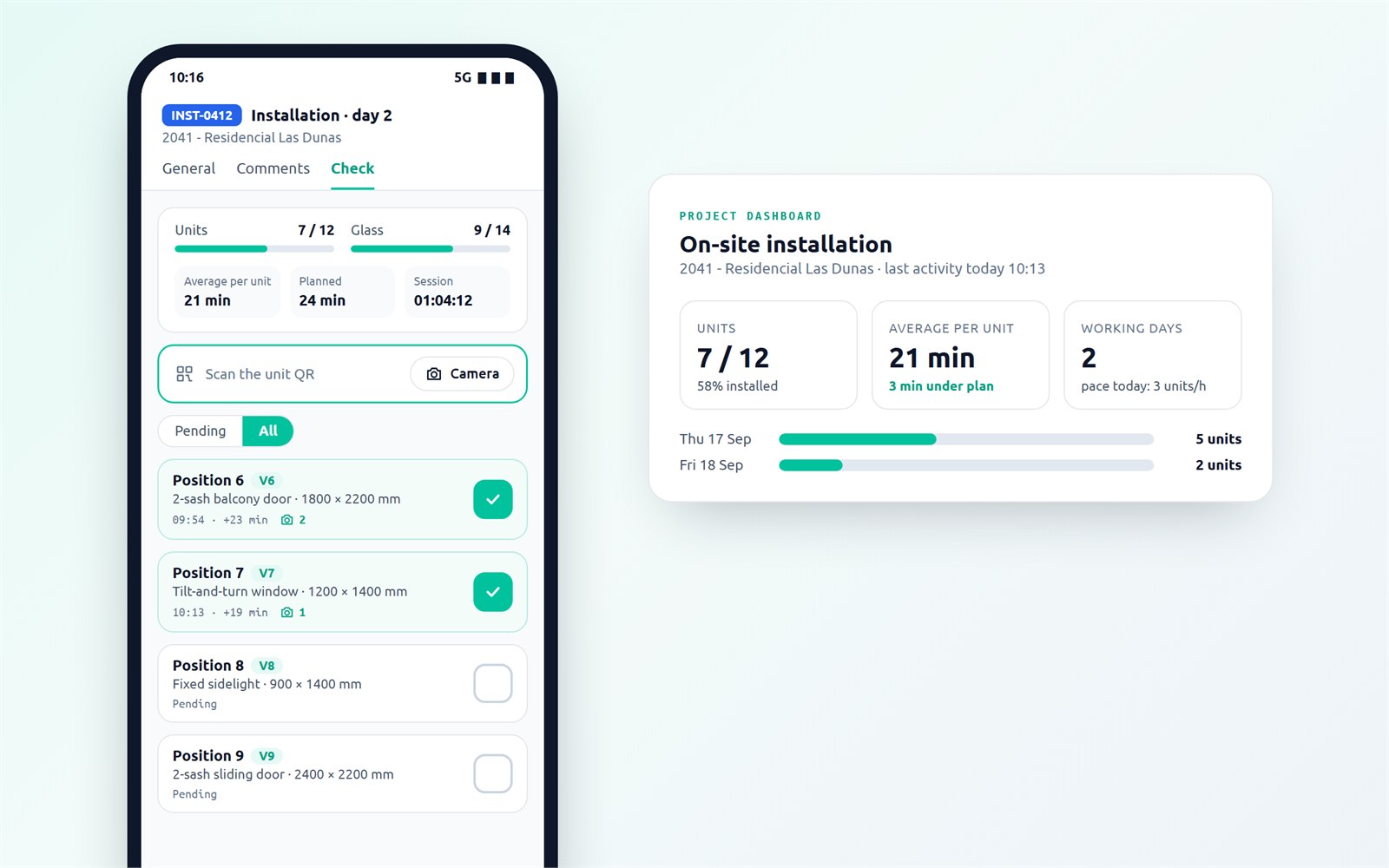
Every installation appointment has a Check tab listing the units and glass panes that came out of production. The installer ticks them off by scanning the QR or by hand, and can attach photos from the phone camera to each item.
Every tick keeps its timestamp, so the project shows what really happened on site: units installed, average time per unit, pace of the last day, working days and deviation from the plan.
Recycle bin: 30 days to change your mind
Deleting a quote, an order, a purchase invoice, an installation or an entire project is no longer final: Nexus keeps a full copy for 30 days and restores it with one click, with its history and its place in the traceability chain. The document owner is notified when someone deletes it.
Invoicing: send the whole month of invoices in a single pass
Tick the invoices and Nexus prepares one email for each: recipient proposed from the customer’s Invoicing contact, copies, subject, body from your template and the PDF attached. Review everything on one screen, send, and download all the PDFs as a ZIP if needed. From the same selection you can duplicate recurring invoices with a new number and date.
Also, each document can be shown in the customer’s currency: amounts, lines and due dates show the equivalent at a frozen exchange rate, without touching the accounting.
New deal board and real margins per operation
The pipeline board gets headline figures (open, estimated, quoted, overdue activities, closings this month), one-tap filters — I am the owner, Overdue activity, Unread emails — and cards with a health indicator.
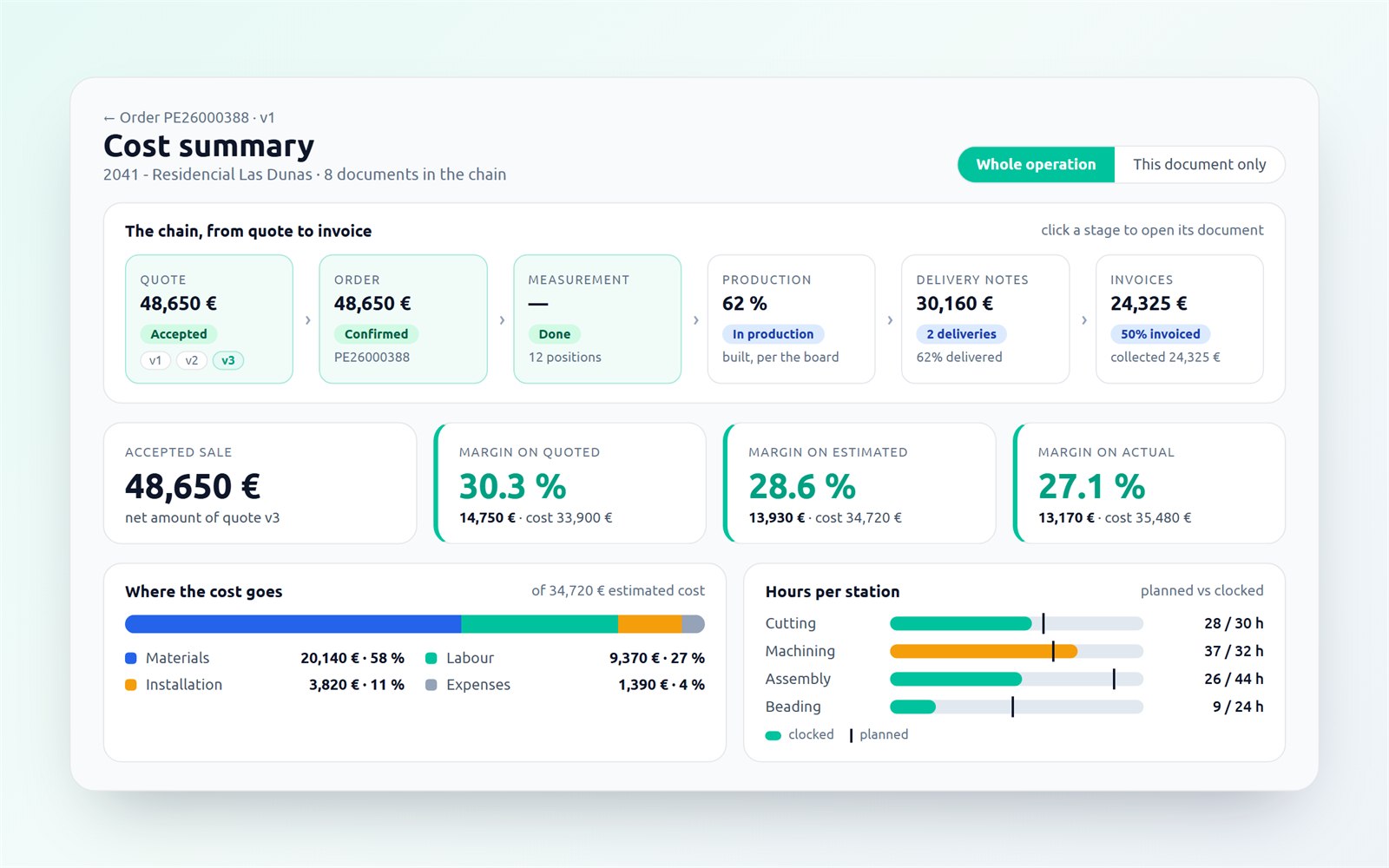
And the cost summary now covers the whole operation: quote, order, production, delivery notes and invoices on one ribbon, with three margins — on quoted, estimated and actual — and actual cost taken from received purchases, shop-floor clock-ins and installation.
Fewer clicks across the whole application
Every sales, purchasing, installation and project document shows its stage ribbon at the top and a Next step button with what comes next. Creating a document is a two-step wizard with a «You are about to create» summary always in view.
Lists remember filters, sorting and page when you come back from a record; tables fold their filters away, offer a compact density and read as cards on a phone; and on document lines, Enter saves.
Machining: from catalogue to machine, no surprises
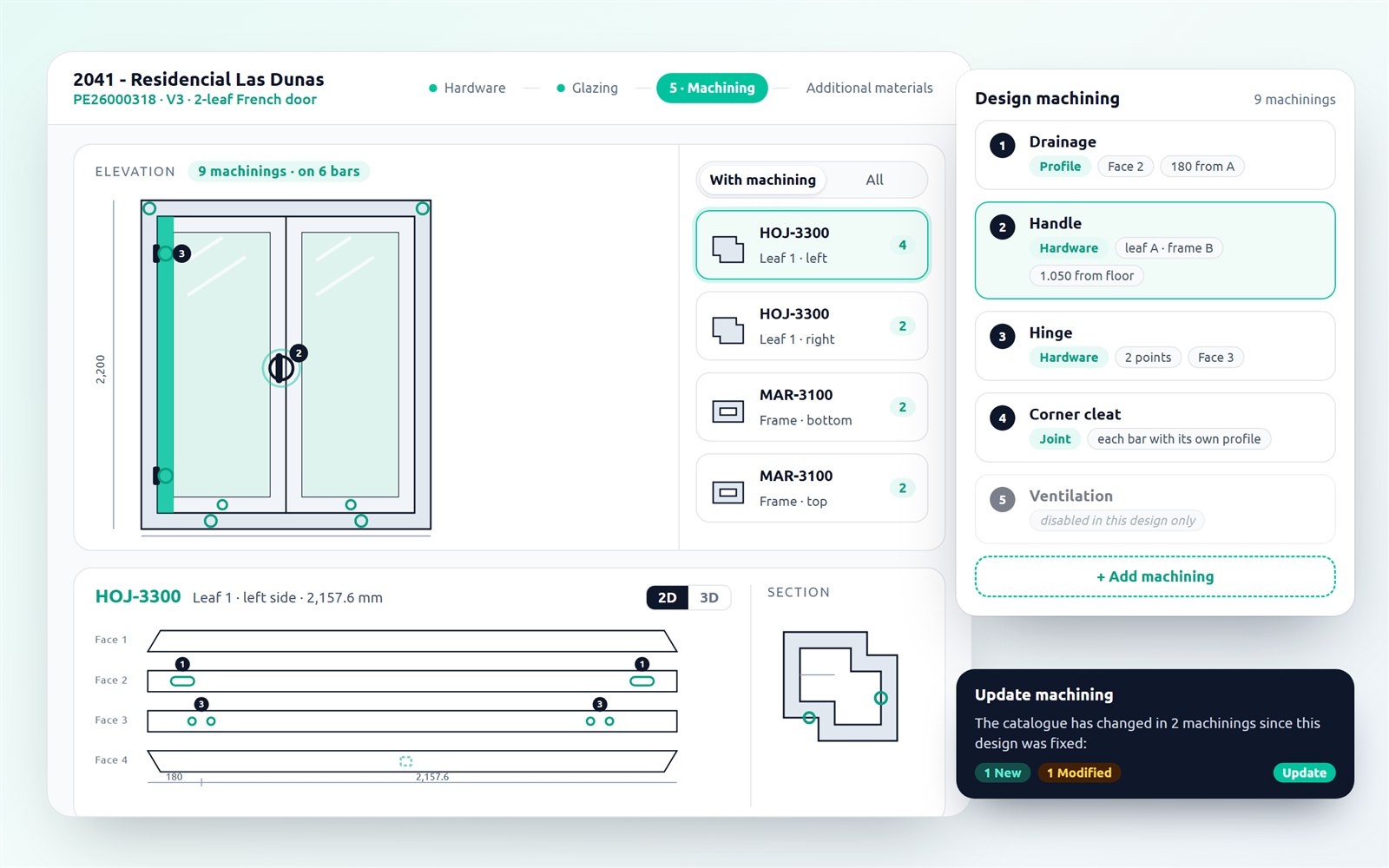
The Editor gets a new step, 5 · Machining: the elevation with every machining marked, the selected bar by faces or in 3D, its section alongside, and a list where you add, move or disable a machining in this design only.
Machinings no longer depend only on the profile: they are also triggered by the hardware (handle and hinges machine the leaf and the frame at the height they are fitted), by the joint (each bar with its own positioning) and by the deduction. Each design keeps its own definitions: a catalogue change does not alter what is already quoted until you press «Update machining», which first shows what will change. And production builds the saved design exactly as it is: what you see in the Editor is what reaches the station.
Sliding windows and glass, edited right on the drawing
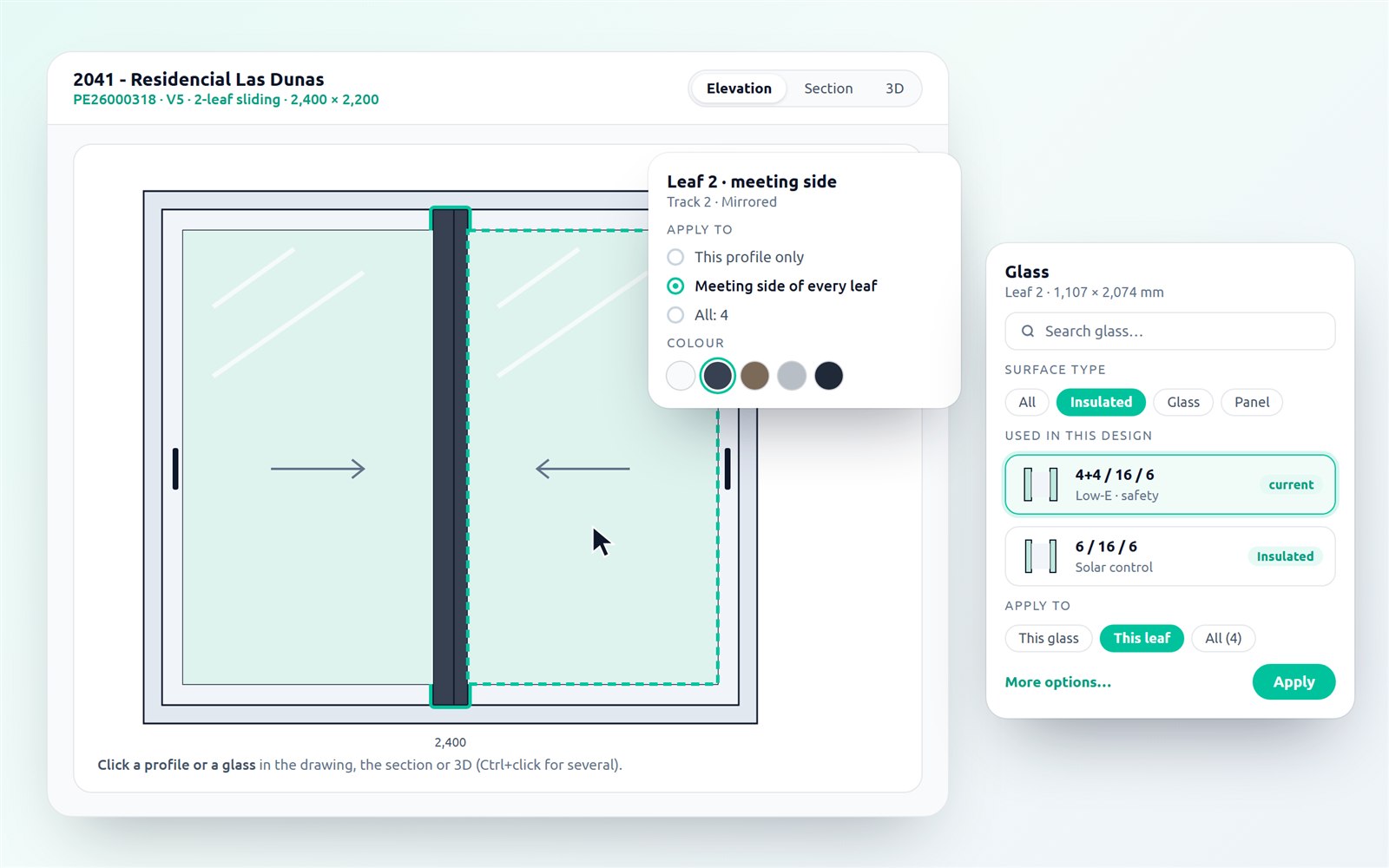
On sliding windows each leaf can take a different profile and colour per side, with «Apply to» this profile, that side on every leaf or the whole section. Each system sets its default profiles, and casements choose their threshold and bottom rail.
To change a glass, just click it in 2D, in the section or in 3D: a card opens with the system glass, a filter by type and insulated units composed right there. Sections show labels with the reference of each profile and the real glass dimension.
Purchases linked to the sale from the start
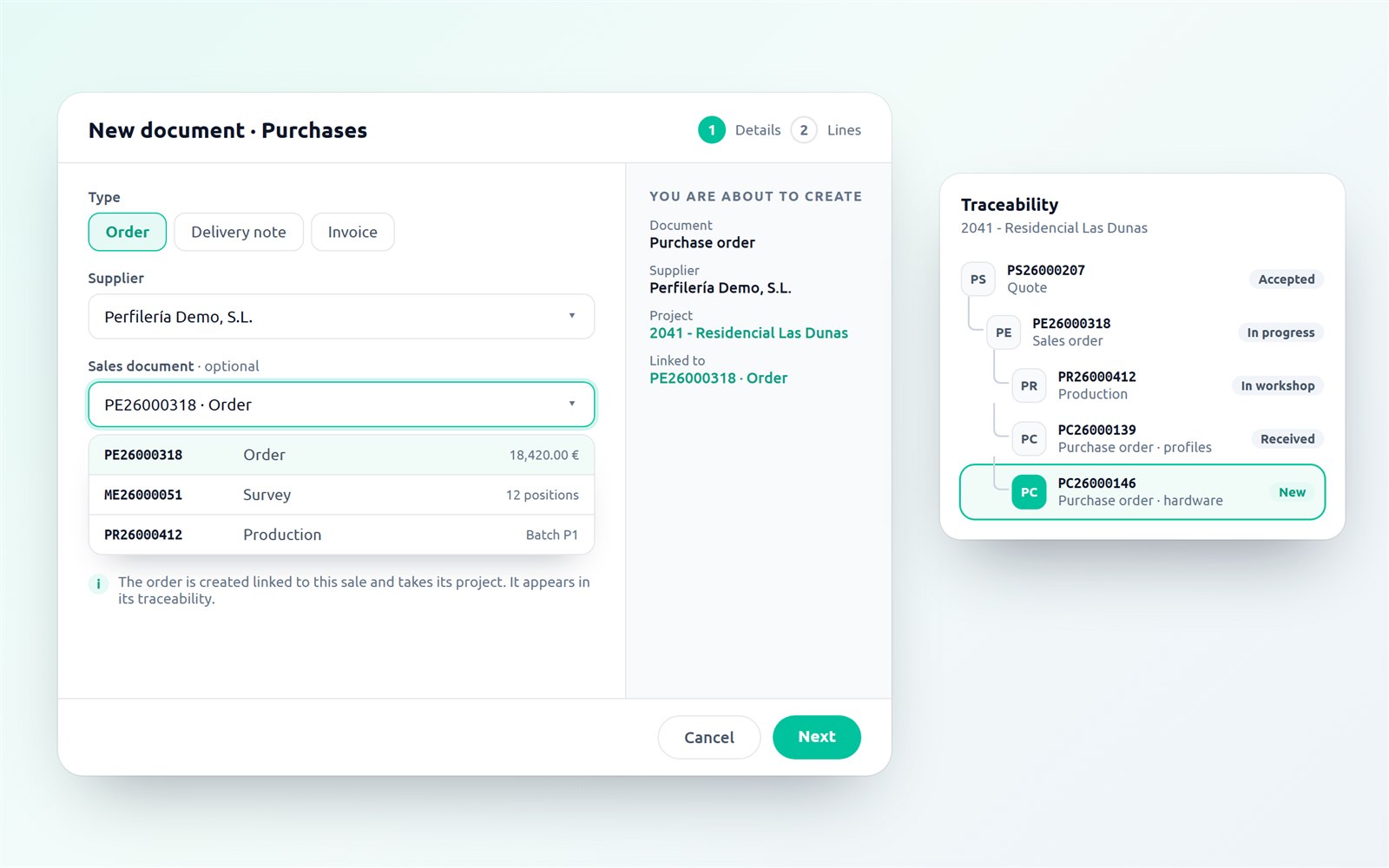
A purchase order can be created already linked to a sales order, survey or production, and takes its project. Orders created on their own can be linked later from «More actions», with «Change» and «Unlink», and they show up in the traceability of the sale.
In invoicing, a down payment can be entered as a % of the total and the amount is worked out automatically.
Redesigned shop-floor labels, printed from the browser
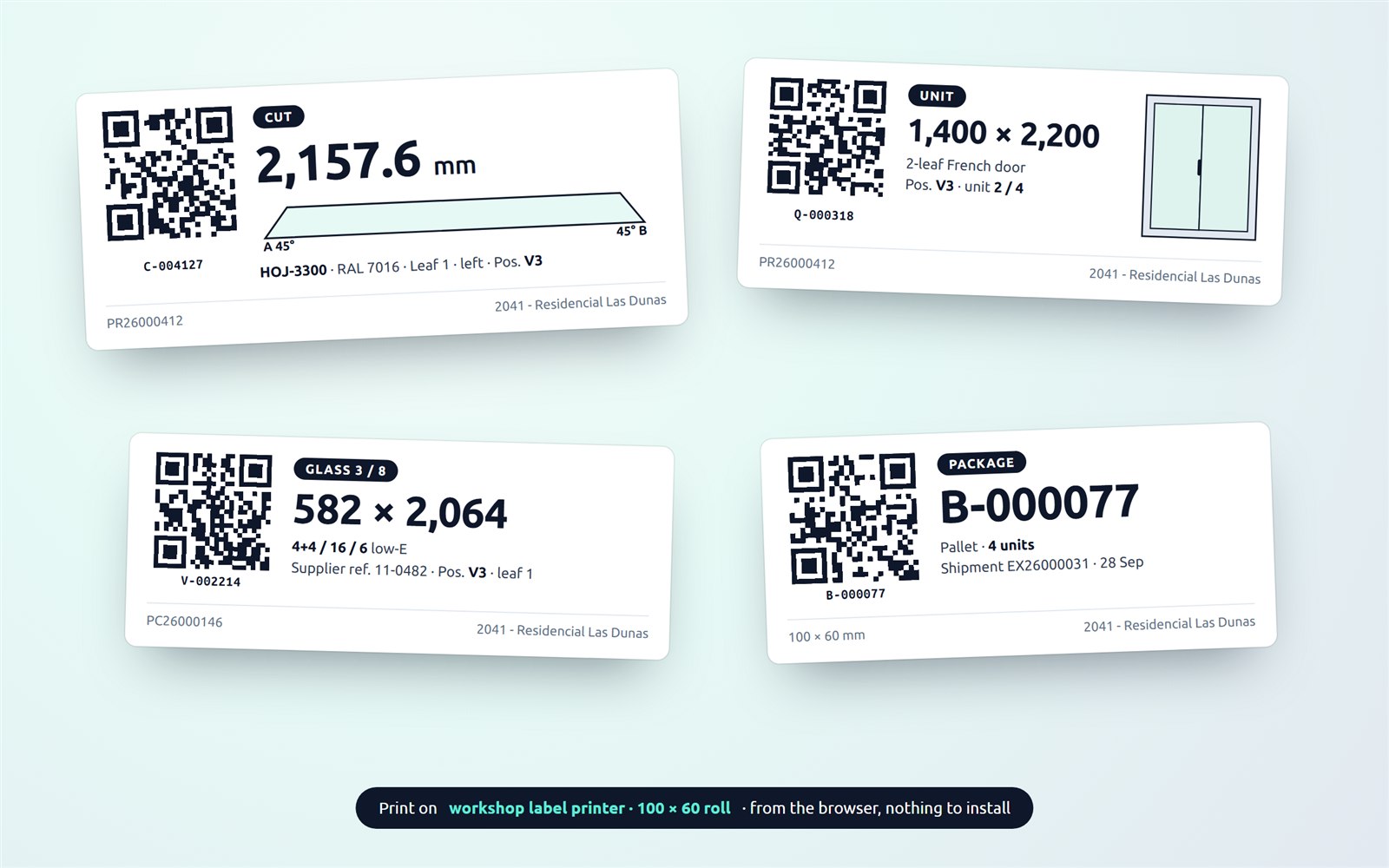
Cut, unit, glass and package labels share one design: the key figure in large type (length to one decimal, glass size, package code), the cut drawn with the angle of each end and the QR with its readable code.
They print at roll size from a PC or tablet, on any printer with a driver, with nothing to install.
Nexus Clad: the building, without fighting the DXF
Three new ways to start: create levels and walls straight from the wizard, draw in sketch mode by typing the length of each wall, or trace a plan from an image, calibrating the scale with two points. For those who do start from a DXF: a guide with a downloadable template, import warnings that say what to fix, and rejected geometry drawn in red.
Also: exact mitres and inside corners at any angle, a panel detail PDF ready for the shop floor, and nesting now explains why a part does not fit and how to solve it.
Also this month
Nexus notifications now arrive by email too, from a company no-reply account · «Forgot your password?» on the sign-in screen, with a single-use link · bulk labour shows what it will affect before applying, with Undo · each document keeps its own copy of the design: changing the order no longer touches the quote · due dates and retentions total the selection · configurable installation language, German included · report an issue to support from any screen (Alt+I), with an email acknowledgement · attachments and production documents in a near full-screen viewer · permissions for several users at once, in blocks · column filters with several values in every list · quotes start as «Pending» and move to «Sent» when emailed · the customer record separates registered, delivery and billing addresses.